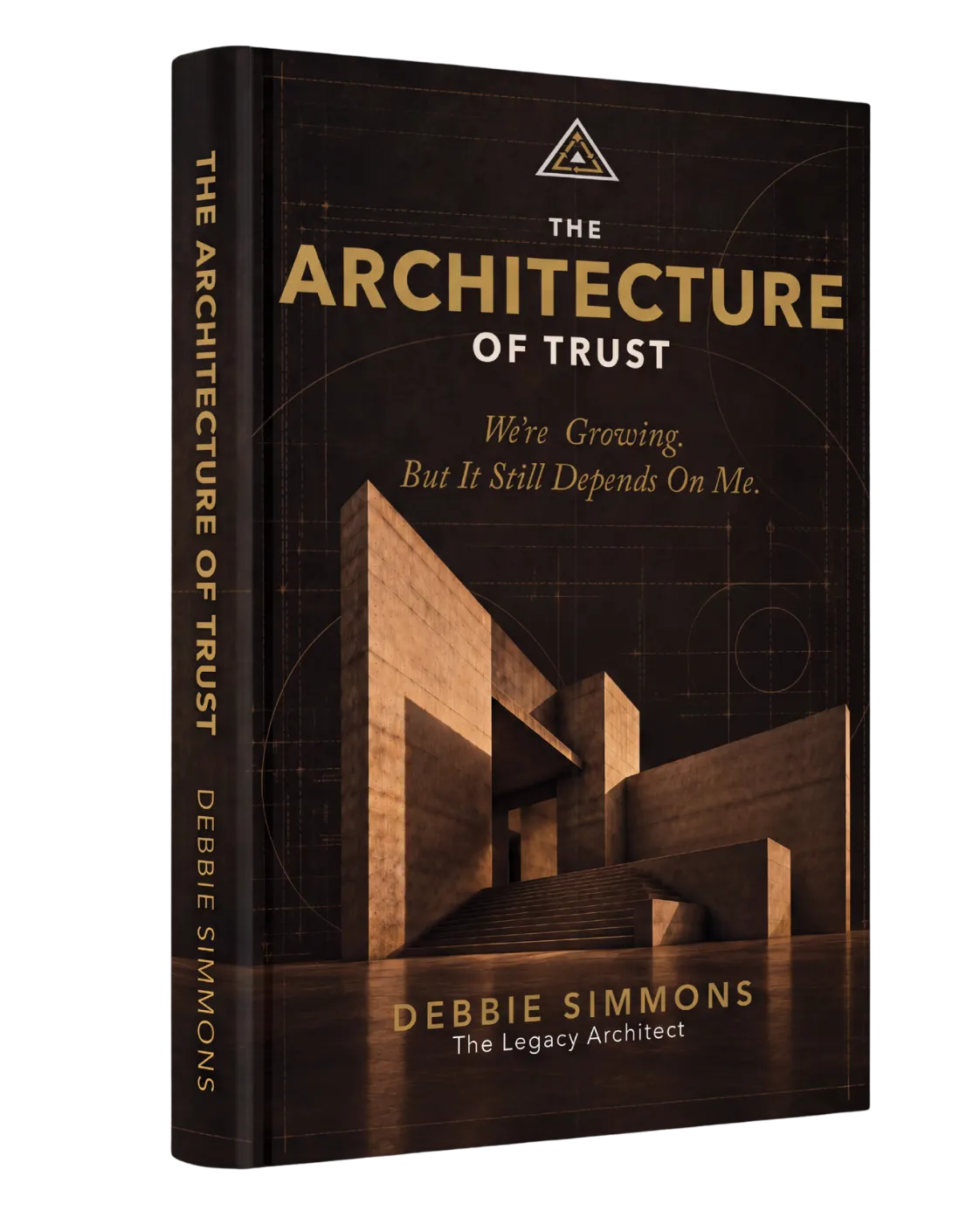
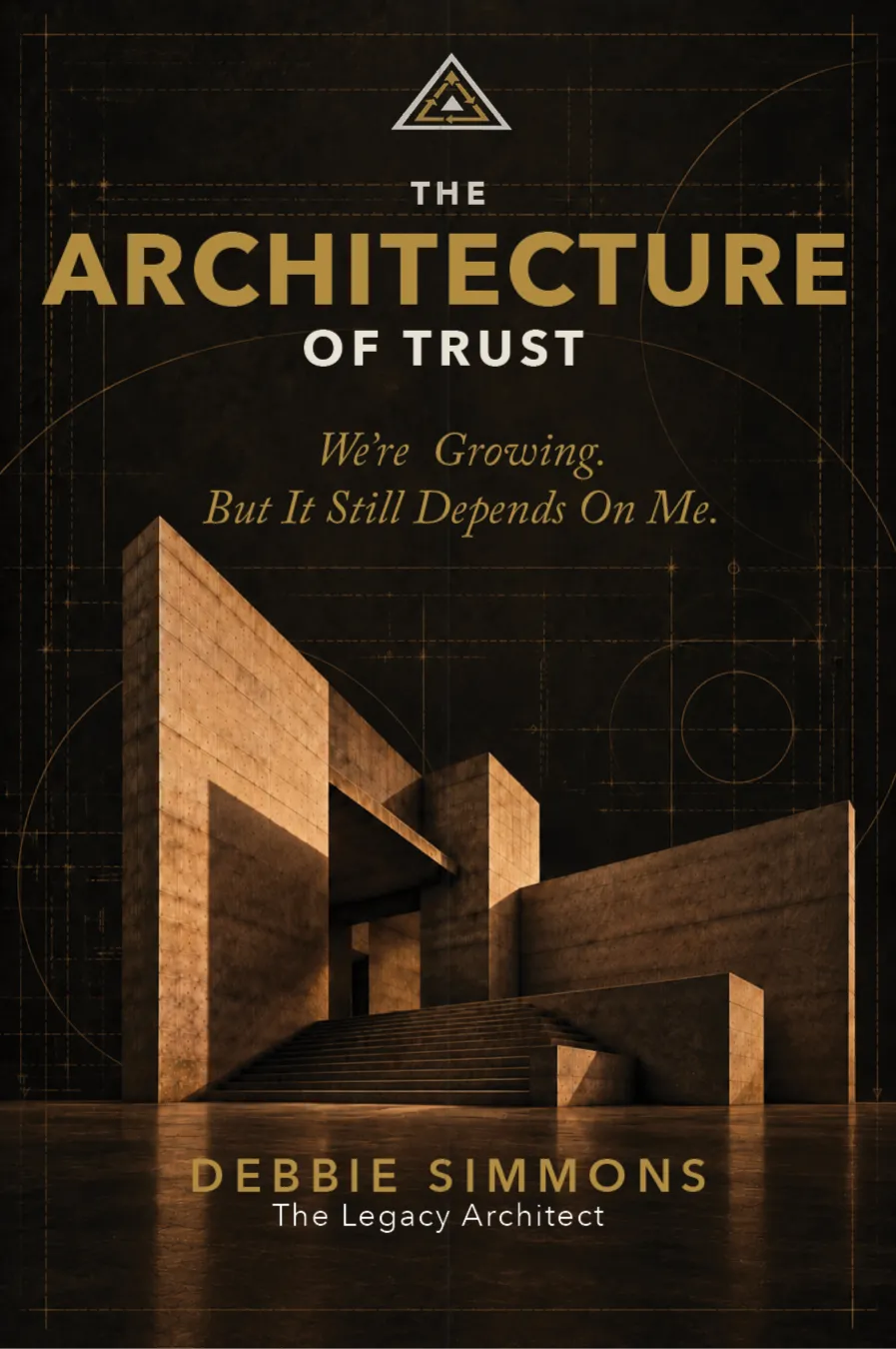
Get your FREE copy of The Architecture of Trust. Just cover $9.95 shipping and handling.
Your Organization Has Grown. Why Does Everything Still Depend on You?
Discover what’s keeping your organization dependent on you, even after you’ve hired capable leaders and delegated responsibility.
PLEASE WATCH THIS VIDEO
Claim Your FREE Copy
Discover where your organization may still depend on you.
Just cover $9.95 shipping and handling.
Does Any of This Sound Familiar?
“Why does everything still come back to me?” You’ve hired capable people. You’ve delegated work. But questions, approvals, and disagreements still climb upward.
“If I don’t stay on top of it, it won’t happen.” You stay copied, attend meetings, check progress, and follow up because experience has taught you that things can drift when you stop watching.
“We have more people, but somehow I have less time.” You added staff, managers, systems, and meetings to create capacity. Instead, growth created even more coordination.
“We cannot keep growing like this.” The organization may be successful, but you can feel that the next stage of growth will increase the strain if nothing changes.
You Built a Team. So Why Does the Organization Still Depend on You?
You hired capable people. You delegated responsibility. You added systems, processes, and management layers because growth was supposed to create more organizational capacity, not simply give you more people to manage.
And yet, decisions still find their way back to you. Questions get escalated that should be resolved elsewhere. Work moves until something becomes unclear, and then your involvement is what gets it moving again.
That doesn’t necessarily mean you hired the wrong people or failed to delegate. It may mean the organization has grown faster than its ability to carry leadership intent, decisions, and execution without depending on your continued involvement.
Can What We’ve Built Carry the Next Stage of Growth Without Requiring More of Me?
The Problem May Not Be Your People
What if the problem isn’t your leadership?
As organizations grow, the structure carrying decisions, responsibilities, and execution must grow with them. When it doesn’t, capable people become increasingly dependent on executive intervention.
The Architecture of Trust helps you recognize where those dependencies exist and why they continue.
Just cover $9.95 shipping and handling.
Is Your Organization’s Operating Structure Ready for the Next Stage of Growth?
Growth puts more distance between leadership intent and the people responsible for
carrying it out. More people, functions, layers, and handoffs can create greater capability,
but only if the organization can carry decisions and responsibility through that complexity.
As you think about your organization,
how often are you seeing these patterns?
Decisions that seemed settled come back for clarification or approval.
Managers escalate issues they should increasingly be able to carry.
Work moves well while a particular leader is involved, then begins to drift when their
attention shifts.
More people and resources have created more coordination, meetings, and follow-up
rather than more capacity.
Growth is increasing the amount of leadership attention required to keep execution
moving.
One occurrence may mean very little.
When these patterns repeat, they’re worth paying attention to.
Architecture of Trust Helps You See Why the Organization Still Depends on You
The book gives you a different way to look at what happens as an organization grows. Instead of assuming every recurring problem is about communication, accountability, or individual performance, you begin looking at how effectively the organization carries leadership intent, decisions, and execution as complexity increases.
What You’ll Discover Inside The Architecture of Trust
Why adding capable leaders doesn’t always reduce executive dependence.
How the Hidden Trust Tax consumes capacity through repeated decisions, unnecessary escalation, and constant intervention.
Why decisions lose clarity and ownership as organizations become more complex.
How the Seven Laws of Structural Trust reveal weaknesses in the architecture carrying your organization.
What it takes to build an organization capable of carrying your vision without holding everything together.
The goal isn’t to make leadership less important. It’s to build an organization that can continue moving when leadership attention needs to move somewhere else.
Are You Ready to Build an Organization That Can Carry More Without Requiring More of You?
Growth Should Not Make Your Organization More Dependent on You
Growth will always create more complexity. The question is whether that complexity produces greater organizational capability or simply requires more human effort to hold everything together.
As the organization becomes stronger, decisions should be able to travel farther without losing their intent. Responsibility should move without constantly being pushed back upward. Capable leaders should be able to act without waiting for executive intervention,
and execution should continue even when your attention shifts to something else.
That doesn’t mean you disappear from the organization. It means your involvement becomes increasingly focused on the work only you can do, rather than repeatedly stepping back into work the organization should be able to carry.
That’s the leverage growth was supposed to create.
Claim Your FREE Copy
Discover where your organization may still depend on you.
Just cover $9.95 shipping and handling.